Welcome to The Octopuses of Bali: A Diver’s Guide to Bali’s Most Fascinating Eight-Armed Creatures!
The underwater world of Bali is full of surprises, and the octopuses of Bali are among its most fascinating marine residents. Along the coast of Amed and Tulamben, black-sand slopes, coral reefs and muck diving sites offer excellent opportunities to search for these intelligent masters of camouflage.
From the incredible Mimic Octopus to tiny blue-ringed octopuses, the octopuses of Bali display a remarkable variety of colours, patterns and behaviours. Some blend perfectly into the sand, while others change colour, squeeze into tiny spaces or imitate other marine animals.
Join Bali Diversity to discover the octopuses you may encounter on your next dive in Bali.
Wonderpus (Wunderpus photogenicus) is a striking octopus with long, slender arms and distinctive white spots and bands on its reddish-brown body. Unlike the other octopuses of Bali, its white markings remain relatively fixed, and each individual has a unique pattern, almost like a fingerprint.
It lives on sandy and muddy seabeds, where it shelters in burrows. At dawn and dusk, it often emerges to hunt small crustaceans and fish. While searching for food, it stretches its arms across the seabed to explore holes and uncover hidden prey.
Where to look: Sandy muck diving sites around Amed and the wider Tulamben region.
Best tip: Look for the distinctive white markings on its body and arms. However, avoid relying on colour alone when identifying it, as the Wonderpus is often confused with the Mimic Octopus.
The Mimic Octopus (Thaumoctopus mimicus) is one of the most remarkable octopuses of Bali. Not only can it change its colour and skin texture, but it can also alter its posture and movements to imitate other marine animals. For example, it may resemble a sea snake, lionfish or flatfish to help avoid predators.
Unlike many other octopuses, the Mimic Octopus has long, slender arms and often moves across open sandy seabeds. In addition, it can squeeze into small spaces and use its surroundings to remain hidden. Its ability to change both its appearance and behaviour makes it a fascinating subject for underwater photographers.
Where to look: Search sandy muck diving sites around Amed Ghost Bay, Melasti and Tulamben.
Best tip: To distinguish it from the Wonderpus, look at its overall body pattern and movements. The Mimic Octopus is famous for its animal-imitation behaviour, whereas the Wonderpus is known for its distinctive white markings. However, colour can vary, so observe several features rather than relying on colour alone. Always keep a respectful distance and never touch or disturb either species.
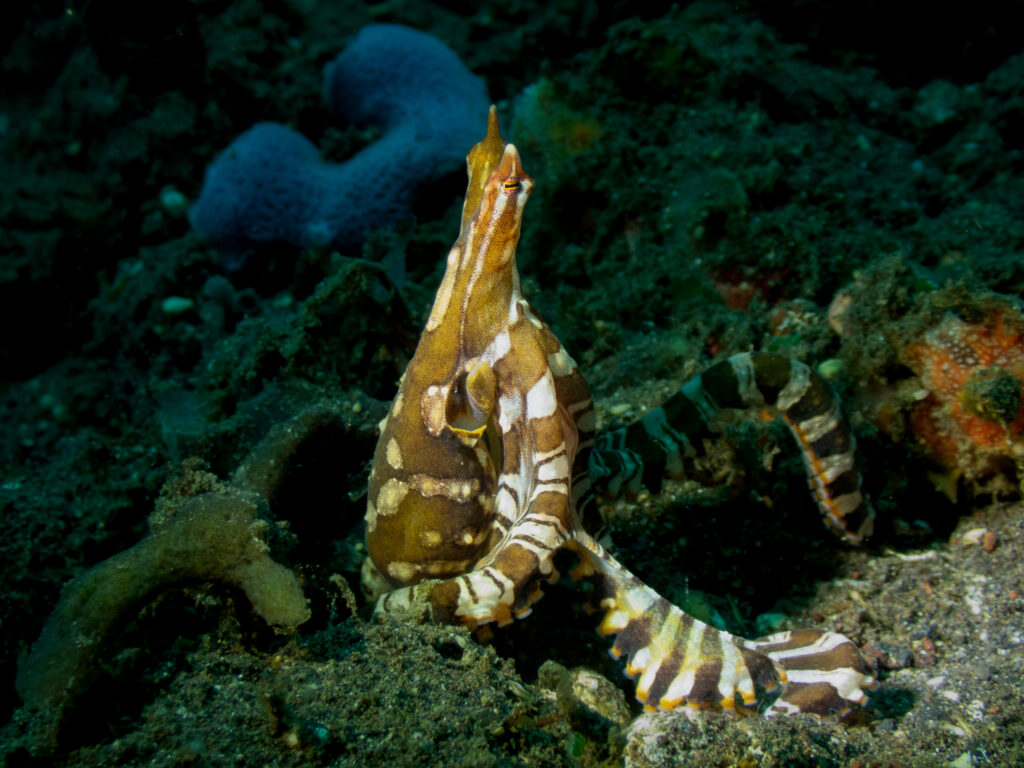
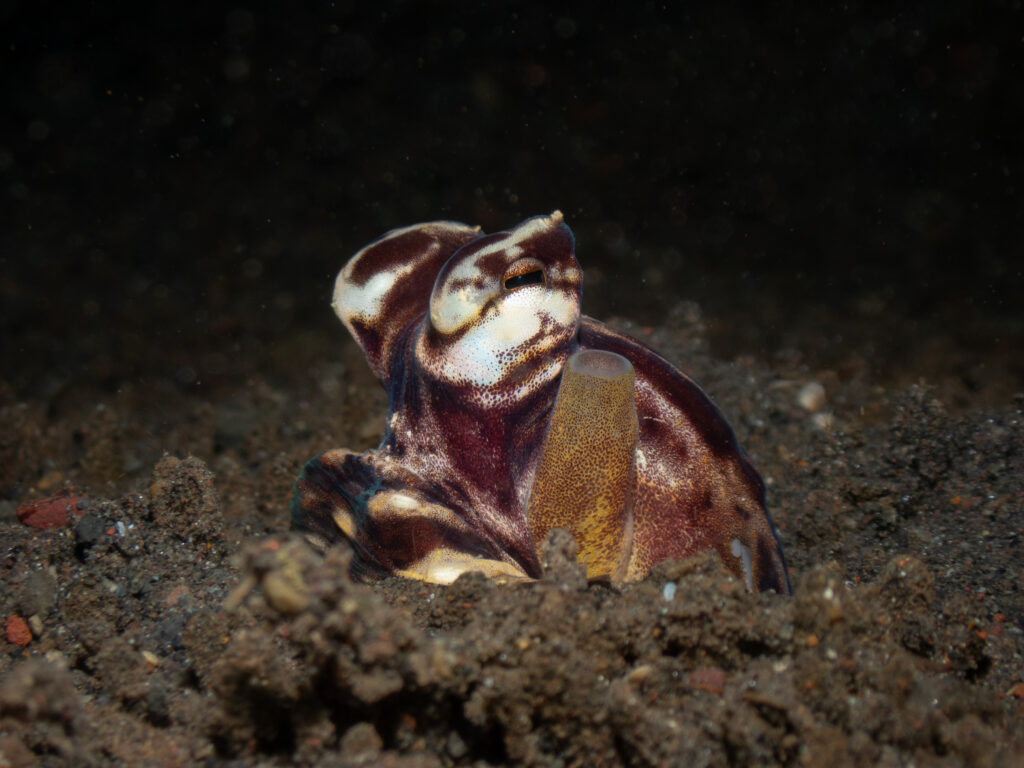
The Mimic Octopus usually has a pale body with brown markings and distinctive white lines along the edges of its arms. It is famous for its ability to imitate other marine animals. The Wonderpus, on the other hand, typically has a reddish-brown body with contrasting white spots and bands along its arms. Looking closely at these markings can help divers tell the two species apart.
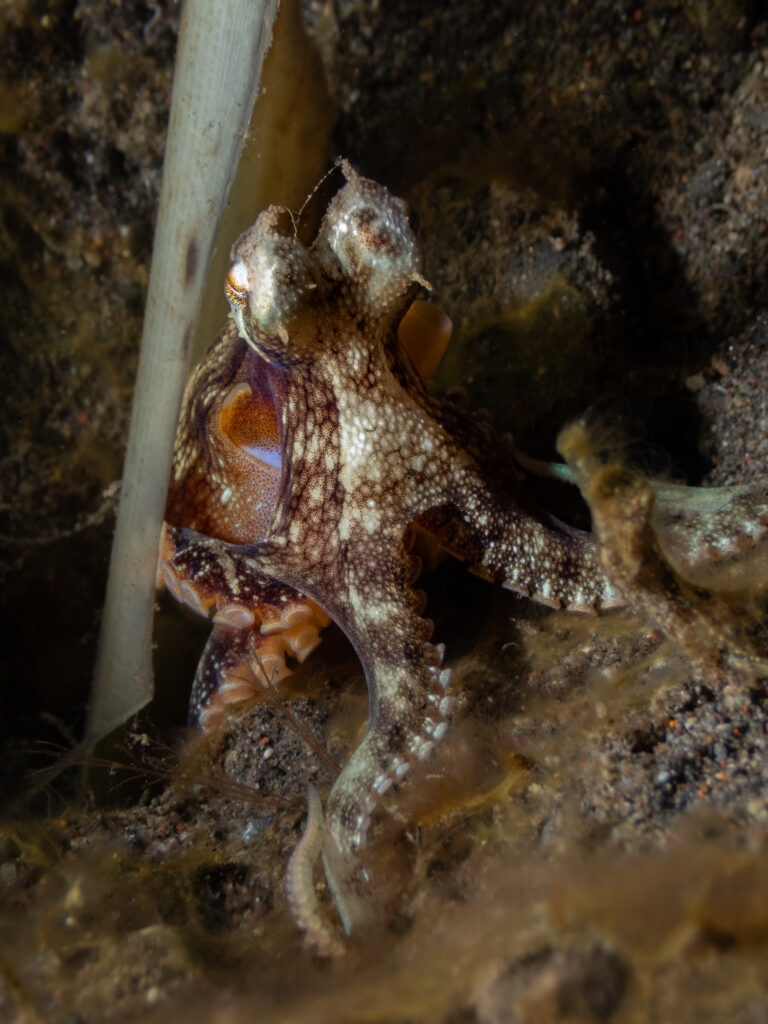
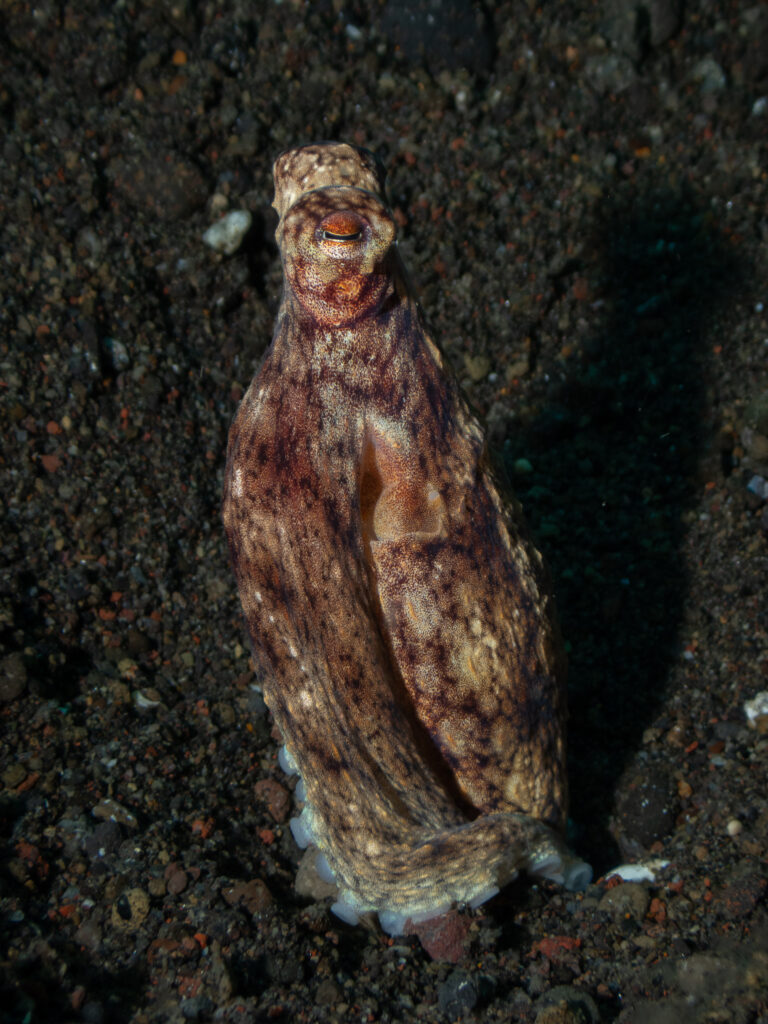
The Coconut Octopus (Amphioctopus marginatus) is famous for its intelligence and unusual use of discarded shells and coconut-shell pieces as portable shelters. Unlike many other octopuses, it may collect suitable objects and carry them across the seabed. When threatened, it can use these shells for protection, making this behaviour fascinating to observe.
In addition, the Coconut Octopus can change its colour and skin texture to blend into its surroundings. It often lives on sandy and muddy seabeds, where it searches for crabs, shrimp and other small prey. Although it can be difficult to spot during the day, a night dive may offer better opportunities to observe octopuses moving across exposed sand.
Where to look: Search sandy and rubble-covered seabeds around Bali.
Best tip: Look for an octopus carrying a shell or hiding beneath a piece of debris. Not every octopus using a shelter is necessarily this species. The coconut octopus is easier to spot during a night dive.
The Long-arm Octopus is known for its slender arms, impressive camouflage and ability to move quickly across the seabed. Depending on its surroundings, it may appear pale and sandy or display darker patterns to blend in with the environment. As a result, spotting one can be challenging, even for experienced divers.
Like other octopuses, it can change its colour and skin texture to help it hide from predators. Furthermore, its flexible arms allow it to explore small crevices and search for crabs and other small prey. Although it may move quickly when disturbed, it is best to remain still and observe its natural behaviour. This also creates better opportunities for underwater photography.
Where to look: Search sandy muck diving sites around Amed and Tulamben, particularly near small holes, scattered rubble and patches of sand.
Best tip: Move slowly and scan the seabed carefully. Instead of approaching too closely, give the octopus time to emerge naturally.
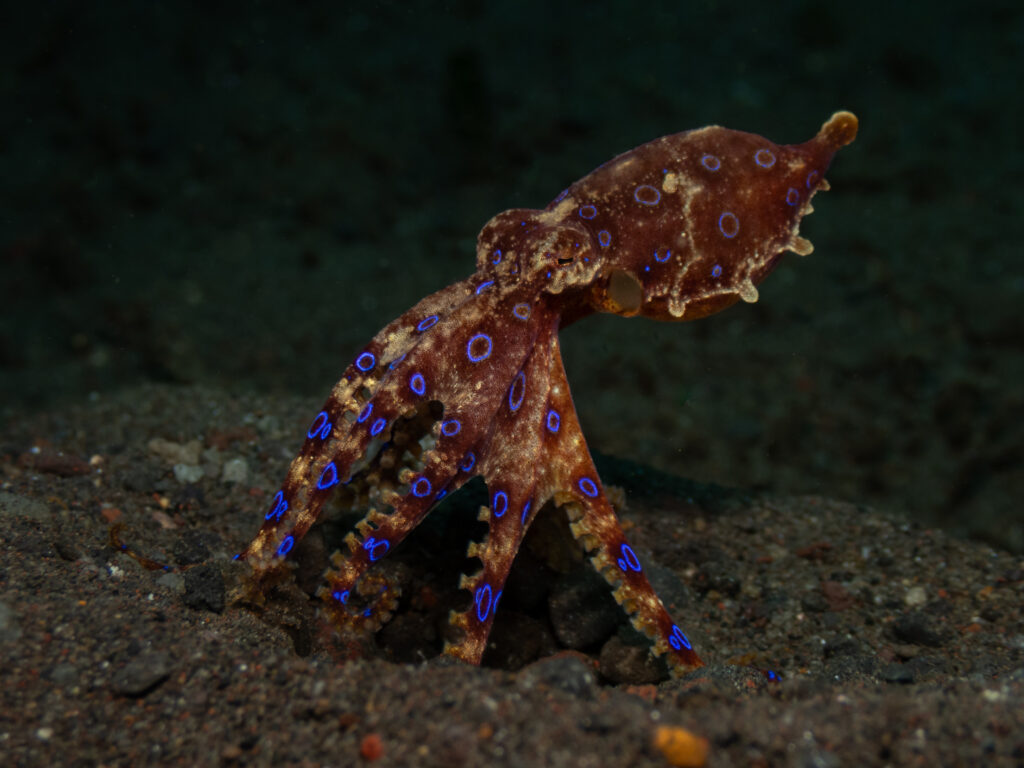
The Blue-Ringed Octopus is small, beautiful and potentially dangerous, making it one of the most important marine animals for divers to recognise. Although it may look harmless, its venom contains powerful toxins that can cause paralysis and potentially be fatal to humans. Which makes it one of the most fascinating octopuses of Bali. For this reason, it should always be observed without touching or handling it.
When threatened, the octopus may display vivid electric-blue rings as a warning signal. However, these rings may not always be clearly visible, so never rely on their presence to identify a potentially dangerous animal. Blue-ringed octopuses typically shelter in small crevices, beneath rocks or among coral rubble. Because they are small and well camouflaged, they can be easy to overlook during a dive.
Where to look: Keep an eye on shallow reef areas, sandy seabeds and rubble around Bali. Although sightings are possible, encounters are unpredictable.
Best tip: Observe from a safe distance. Never touch, handle or attempt to move a blue-ringed octopus. Exploring different dive sites in Amed and Tulamben increases your chances of spotting unusual octopuses of Bali.
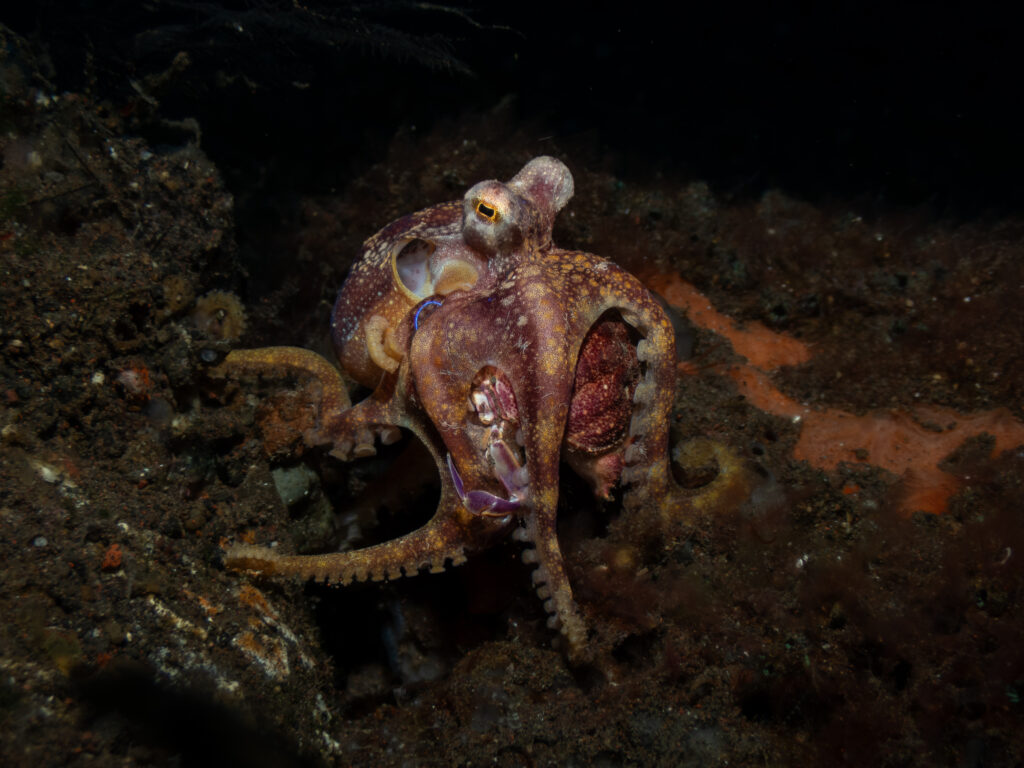
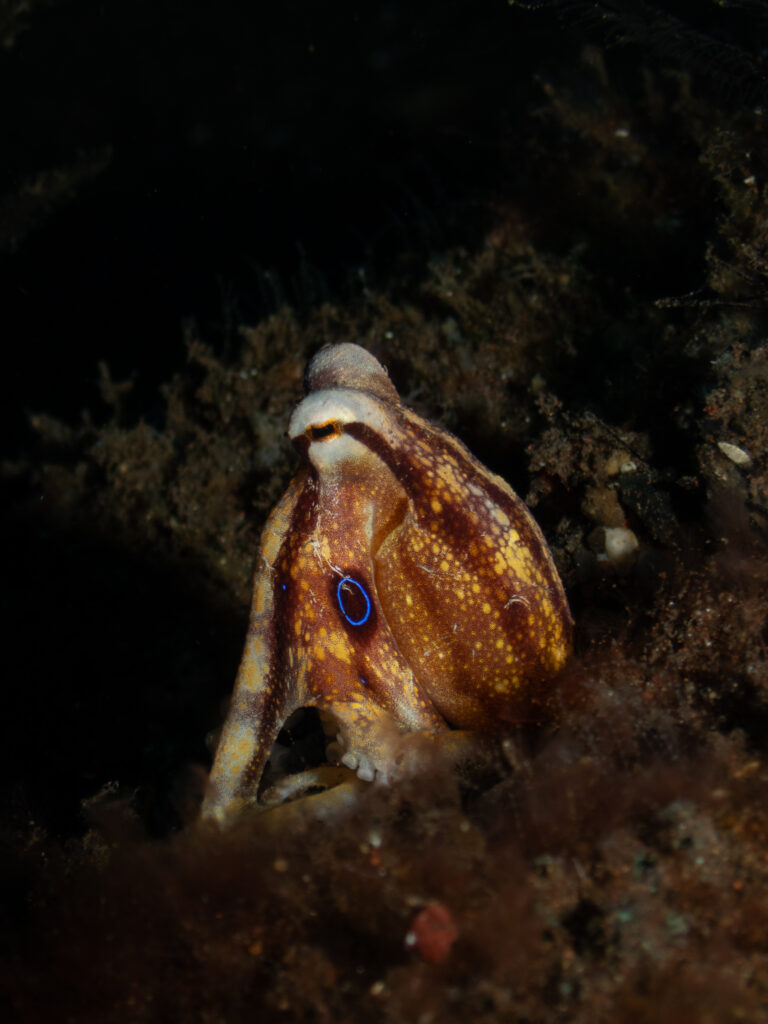
The Mototi Octopus (Amphioctopus mototi) is a small but fascinating species found in tropical Indo-Pacific waters. Although it may look harmless, it is venomous and should always be treated with caution. Like blue-ringed octopuses, it can display vivid blue markings when threatened, making it a remarkable sight for observant divers.
In addition to its striking appearance, the Mototi Octopus uses camouflage to blend into sandy seabeds and coral rubble. During a dive, you may spot it exploring the bottom with its arms or searching for small prey, such as crabs. Furthermore, octopuses use their flexible arms and suckers to hold and manipulate food. However, the Mototi Octopus can be difficult to recognise because its colour and patterns may change depending on its behaviour.
Where to look: Search sandy and rubble-covered seabeds, small shelters and suitable muck diving habitats around Bali. Nevertheless, sightings at individual dive sites are unpredictable.
Best tip: Look closely at its body markings while maintaining a safe distance. Most importantly, never touch, corner or provoke a Mototi Octopus, as it may bite if threatened. By observing patiently and responsibly, you can enjoy this fascinating marine animal without disturbing its natural behaviour.
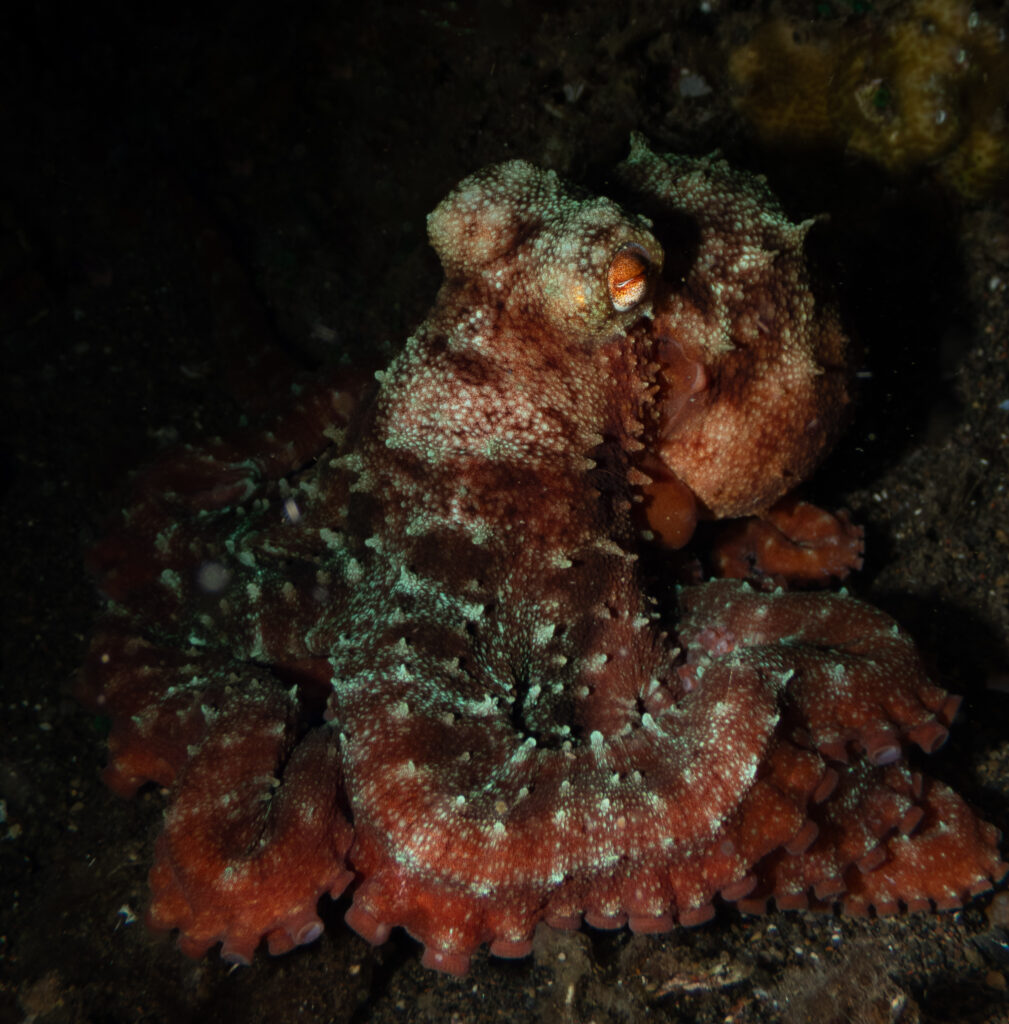
The Starry Night Octopus is a fascinating marine animal known for its dark body and contrasting pale spots, which resemble a starry night sky. Because of this distinctive appearance, it can be an exciting discovery for macro divers and underwater photographers. However, its excellent camouflage means it can easily blend into dark sand, rocks and coral rubble.
Like other octopuses, it can change its colour and skin texture to match its surroundings. In addition, it uses its flexible arms to explore crevices, investigate its environment and search for prey, including small crustaceans. When threatened, it may alter its colour or posture to help conceal itself or discourage potential predators. As a result, patience and careful observation are essential when searching for this elusive animal.
Where to look: Search sandy and rubble-covered seabeds, muck diving sites and sheltered areas around Amed, Tulamben and the surrounding northeast Bali coast. Nevertheless, sightings are unpredictable, and the exact location depends on the species and local conditions.
Best tip: Scan small holes, scattered rubble and dark patches of sand slowly. Furthermore, use your dive torch to observe its markings clearly, while avoiding shining it directly at the animal for prolonged periods. Most importantly, never touch, chase or disturb it.
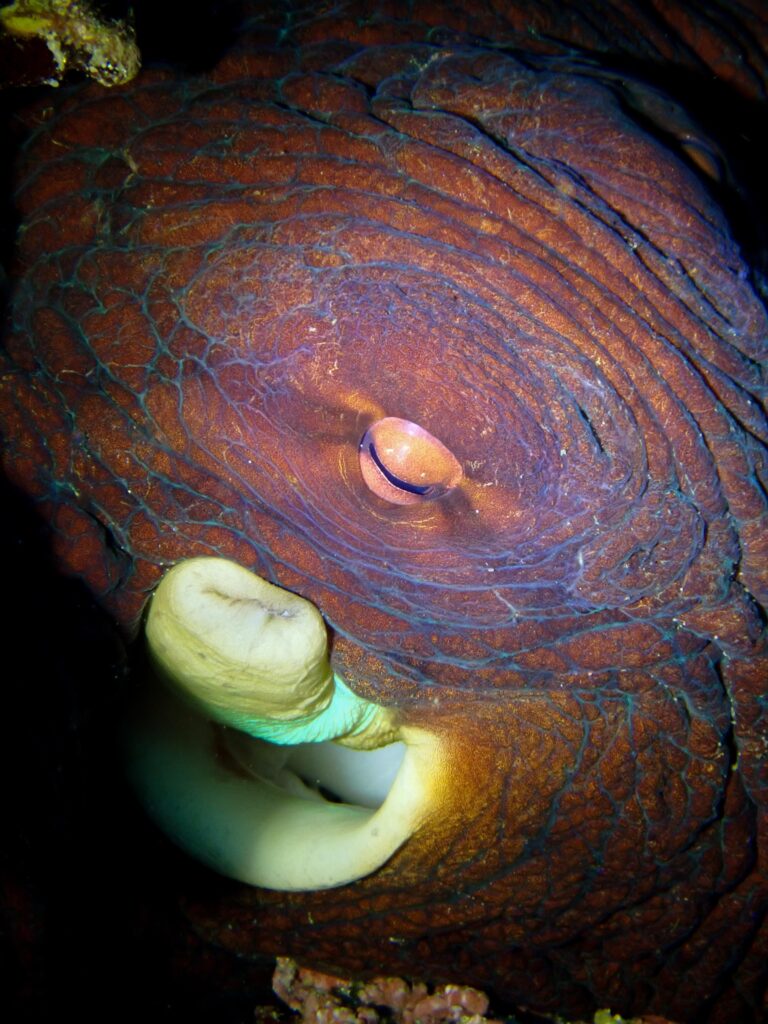
The Day Octopus (Octopus cyanea), also known as the Big Blue Octopus, is a fascinating reef-dwelling species found throughout the tropical Indo-Pacific. Unlike many octopuses that are more active at night, it often hunts during the day. As a result, divers may have a better chance of observing its natural behaviour during daylight dives.
One of its most impressive features is its ability to camouflage itself. It can rapidly change its colour, patterns and skin texture to blend into coral reefs, rocks and rubble. Furthermore, it uses its eight flexible arms to explore crevices and search for crabs, shrimp and other small prey. While hunting, it may move across the reef, investigate holes or uncover hidden animals beneath loose rubble.
In addition to its camouflage, the Day Octopus is known for its intelligence and problem-solving abilities. For example, it can learn from its surroundings and adapt its behaviour when searching for food. However, when threatened, it may suddenly change colour, retreat into a crevice or release a cloud of ink to escape.
Where to look: Search coral reefs, rocky areas and coral rubble around Bali, including suitable dive sites in Amed and Tulamben.
Best tip: Look for a pair of eyes peeking out of a crevice or a patch of colour that seems to move against the reef. Because its camouflage is so effective, move slowly and scan the reef carefully. Finally, maintain good buoyancy and keep a respectful distance to avoid disturbing this fascinating animal.
The Algae Octopus (Abdopus aculeatus) is a small, fascinating octopus known for its excellent camouflage. It is often associated with shallow sandy seabeds mixed with algae and rubble. Because its mottled colours and changing skin texture help it blend into its surroundings, it can be surprisingly difficult to spot. As a result, finding one can be a rewarding experience for macro divers and underwater photographers.
In addition to its camouflage, this little octopus is an active hunter. It uses its eight flexible arms to explore the seabed and search for small crustaceans and other prey. Meanwhile, it can rapidly change its posture and skin texture to match nearby algae, sand or rubble. When disturbed, it may quickly move away or hide among the surrounding debris. Therefore, patience is essential if you want to observe its natural behaviour.
Where to look: Sandy, algae-covered seabeds and rubble areas around Amed, Tulamben and the surrounding northeast Bali coast. Sightings depend on local conditions and are more frequent during night dives.
Best tip: Scan the seabed slowly and look for subtle movements among algae and small pieces of rubble. Watch from a respectful distance and avoid disturbing its habitat.
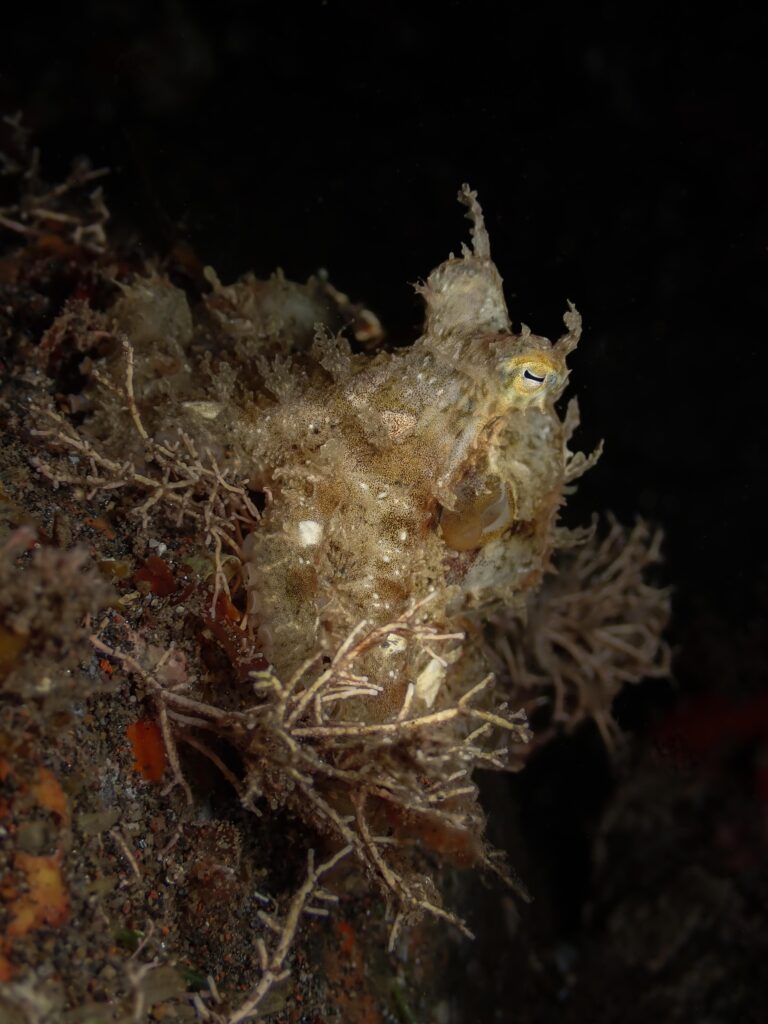
The Hairy Octopus is a fascinating discovery for macro divers and underwater photographers. It is known for its unusual, fuzzy appearance, which can make it look almost like a tiny moving clump of algae or debris. By changing its skin texture and posture, it can create a rough outline that helps it blend into sandy and rubble-covered environments. As a result, spotting one can be surprisingly challenging, even for experienced divers.
In addition to its remarkable camouflage, this small octopus uses its flexible arms to explore the seabed and search for small prey, including crustaceans. Like other octopuses, it can change colour and texture to match its surroundings. However, its appearance may vary depending on its behaviour and the environment, so not every octopus with a fuzzy outline is necessarily the same species.
Where to look: Search sandy and silty muck diving sites around Amed, Tulamben and the surrounding northeast Bali coast. Although sightings depend on local conditions, carefully scanning the seabed can help you discover these well-camouflaged animals.
Best tip: Look for a rough, fuzzy outline moving among sand, algae and rubble. Instead of approaching quickly, remain still and observe patiently. Furthermore, maintain good buoyancy and avoid touching or disturbing the animal.
Finding the octopuses of Bali takes patience, good observation skills and un understanding of their habitat. Octopuses are masters of camouflage and can change their colour, skin texture and posture to blend into their surroundings. Therefore, spotting one often requires patience, a sharp eye and a little experience. Fortunately, a few simple techniques can make your next macro dive even more rewarding.
* Slow down: Moving slowly gives you more time to notice subtle shapes, unusual patterns and small movements. As a result, you are less likely to swim past a well-hidden octopus.
* Look at the details: Check small holes, rubble, empty shells and the edges of coral formations. In particular, pay attention to areas where an octopus could hide or search for food.
* Watch for movement: An arm extending from a crevice, a slight change in colour or a shifting patch of sand may reveal a hidden animal. Even though octopuses are excellent at camouflage, their movements can give them away.
* Choose the right time: Some octopuses are active during the day, while others may be easier to spot at night. Consequently, night dives can offer different opportunities to observe their behaviour, although sightings are never guaranteed.
* Dive with a knowledgeable guide: Local guides can help you recognise different species and explain their behaviour. Furthermore, they often know which habitats are worth searching.
* Respect their space: Never touch, chase, corner or force an octopus out of hiding. Instead, remain at a comfortable distance and allow it to behave naturally.
Ultimately, a successful macro dive is not about finding the greatest number of animals. Rather, it is about noticing the small details, learning about marine life and observing each creature without disturbing its natural behaviour. With patience and good buoyancy, every dive can become an opportunity to discover something new.
Octopuses are intelligent, sensitive animals that deserve respectful observation.
Keep your buoyancy under control, avoid resting your hands or equipment on the seabed, and never rearrange shells or debris to create a photograph.
Blue-ringed octopuses should always be treated as potentially dangerous. Admire them from a distance and never attempt to handle them.
Responsible diving helps protect the marine life that makes Amed and Tulamben special.
Whether you explore coral reefs or sandy muck diving sites, the octopuses of Bali offer unforgettable encounters for curious divers.
1. Underwater Kwaj – Bali Cephalopods – Photographs and identification references for octopuses and other cephalopods recorded in Bali.
2. Dynamic Mimicry in an Indo-Malayan Octopus – Proceedings of the Royal Society B – Scientific research on the Mimic Octopus and its remarkable behaviour.
3. Divers Alert Network – Bali Road Trip – Diving experiences and marine-life observations from Bali.

Lisa is a Belgian PADI scuba diving instructor and emergency nurse with a big passion for the underwater world, especially macro and muck diving. Over time, this passion grew into underwater macro photography! Join Lisa for her UW Macro Photography Course, where she’ll teach you how to capture the tiny wonders of the ocean and take stunning photos.
You can follow Lisa’s underwater macro photography adventures on Instagram at @mucknificent_uw and @balidiversity to discover the tiny wonders of the ocean through her lens!
+6282230141772 (Eng, Fr, Sp) +6281779169996 (Eng, Indo)
info@balidiversity.com
balidiversitydiveresort@gmail.com
Jl. Raya Bunutan, Banjar Dinas Bunutan, Desa Bunutan, Kec. Abang, Karangasem Bali


made with ♥ @ balidiversity 2023, All rights reserved | Privacy Policy